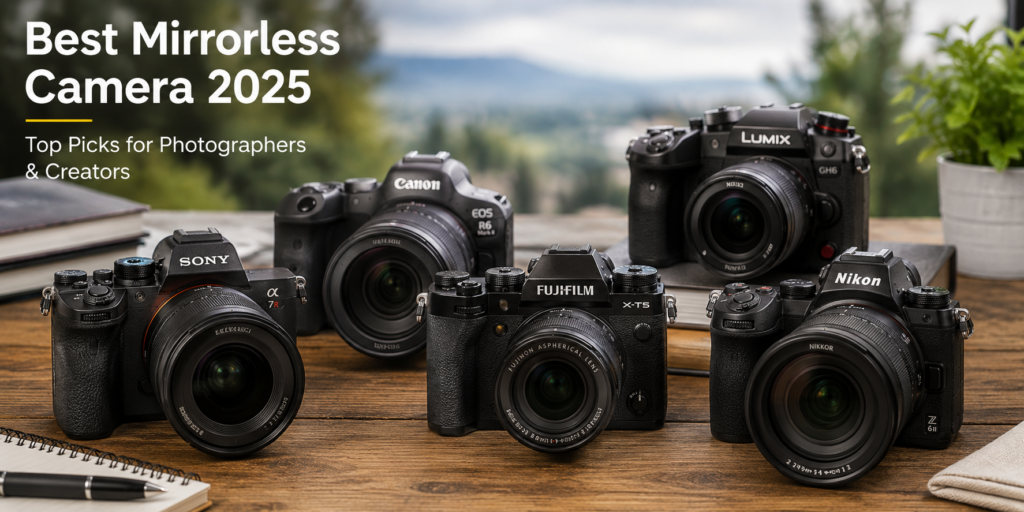

Choosing the best mirrorless camera 2025 is less about finding the most expensive body and more about matching a camera to the way you actually shoot. A travel photographer needs different features from a wedding shooter or a beginner learning manual controls. Fortunately, today’s mirrorless cameras offer excellent image quality, fast autofocus, impressive video, and increasingly capable compact designs. This guide looks at the strongest options and explains what really matters before you spend your money.
What Makes a Best mirrorless camera 2025 Stand Out
Best mirrorless camera 2025 have become extremely capable because manufacturers can build advanced autofocus, electronic viewfinders, powerful processors, and high-resolution sensors into relatively compact bodies.
One of the biggest advantages is real-time autofocus. Modern cameras can recognize faces, eyes, animals, vehicles, and other subjects, allowing photographers to concentrate more on composition instead of constantly moving the focus point.
Other important features include:
- Sensor size and image quality
- Autofocus speed and subject tracking
- In-body image stabilization
- Electronic viewfinder quality
- Battery life
- Lens availability
- Video recording capabilities
- Weight and overall handling
In my experience, lens selection is often overlooked. A camera body may have outstanding specifications, but the right lens can make a much bigger difference to the final photograph.
Best Overall Mirrorless Camera
For photographers who want a versatile premium camera, the Sony Alpha 7 IV remains a strong all-round choice. Its full-frame sensor delivers excellent image quality, while its autofocus system is particularly useful for portraits, street photography, events, and everyday shooting.
The camera also offers strong video capabilities, making it attractive to creators who photograph and record video with the same body.
Another compelling option is the Canon EOS R6 Mark II. It combines fast continuous shooting, dependable autofocus, strong low-light performance, and excellent ergonomics. For photographers who frequently shoot moving subjects, its responsiveness can be especially valuable.
The best overall choice ultimately depends on the lens system you prefer. Sony has an enormous selection of native and third-party lenses, while Canon’s RF ecosystem offers many excellent options for both photography and video.
Best Mirrorless Camera for Beginners
Beginners do not necessarily need a huge professional body with dozens of complicated controls. A camera that feels comfortable and makes it easy to learn is usually a smarter investment.
The Canon EOS R10 is an excellent example. It offers a relatively approachable design, strong autofocus, a capable APS-C sensor, and enough manual controls to support a photographer as their skills develop.
The Sony a6400 is another popular option. Its compact body makes it convenient for travel and everyday photography, while its autofocus system remains impressive for its class.
For someone moving up from a smartphone, either type of camera can feel like a major step forward. The important thing is to spend time learning exposure, focal length, depth of field, and composition rather than becoming obsessed with specifications.
Best Mirrorless Camera for Professional Photography
Professional photographers often prioritize reliability, autofocus, durability, and lens selection over a simple megapixel race.
The Nikon Z8 is one of the standout high-performance mirrorless cameras for demanding photographers. It combines a high-resolution full-frame sensor with sophisticated autofocus and advanced video features in a body that is considerably smaller than Nikon’s flagship professional models.
For photographers who need even more resolution, the Sony Alpha 7R V is worth considering. Its high-resolution sensor is particularly appealing for landscapes, commercial photography, studio work, and situations where extensive cropping may be required.
However, more resolution is not automatically better. Large files require more storage and processing power. If you mostly photograph family events, travel, or social media content, a lower-resolution camera may actually be more practical.
Best Mirrorless Camera for Video
Hybrid creators have plenty of impressive choices in 2025. Cameras such as the Panasonic Lumix S5II have attracted attention because they offer strong video tools without completely sacrificing still photography.
The S5II is particularly interesting for creators who want dependable video autofocus, image stabilization, and a full-frame sensor. Its video-oriented features make it a practical choice for YouTubers, filmmakers, and photographers who regularly switch between stills and video.
Sony and Canon also offer excellent hybrid cameras. When choosing a camera for video, look beyond resolution. Pay attention to overheating behavior, recording formats, stabilization, autofocus, microphone connections, and how comfortable the camera is during long recording sessions.
A camera that records impressive specifications but is uncomfortable to operate may not be the best tool for your workflow.
Best Mirrorless Camera for Travel
Travel photography rewards a balance between image quality and portability. Carrying a heavy professional body and several large lenses can become tiring after several hours of walking.
An APS-C camera such as the Fujifilm X-S20 can be a compelling choice. It provides a relatively compact setup while offering strong image quality, stabilization, and useful video features.
Fujifilm’s film simulation system is another reason some travelers enjoy the brand. These built-in looks can produce attractive images without requiring extensive editing afterward.
Lens choice matters enormously for travel. A compact zoom can be more useful than carrying three separate prime lenses when you are exploring a city, hiking, or moving between destinations.
Full-Frame vs APS-C: Which Should You Buy?
Sensor size is one of the most common questions for people shopping for a mirrorless camera.
Full-frame cameras generally provide advantages in low-light performance, depth-of-field control, and overall image quality. They are particularly attractive to professionals and enthusiasts who regularly work in challenging lighting.
APS-C cameras, however, can offer excellent image quality while keeping the body and lenses smaller and more affordable.
Consider your priorities:
- Choose full frame if low-light performance and professional flexibility are major priorities.
- Choose APS-C if portability and value are more important.
- Consider lens prices before deciding on a system.
- Think about the complete kit rather than only the camera body.
A $2,000 camera paired with an unsuitable lens is rarely a better investment than a more affordable body with a quality lens that suits your photography.
How to Choose the Right Mirrorless Camera
Before buying, think about what you photograph most often. If you mainly take portraits, autofocus and lens selection should be high on your list. Wildlife photographers should prioritize subject tracking and burst performance.
For video creators, stabilization, autofocus, recording formats, and audio connectivity deserve special attention. Landscape photographers may care more about dynamic range, resolution, weather resistance, and lens quality.
Also, hold the camera before buying if possible. Specifications cannot tell you whether the grip feels natural in your hand or whether the controls are comfortable.
A camera should encourage you to take pictures. If it is too heavy, complicated, or uncomfortable, even an exceptional model can spend more time in a bag than in your hands.
Common Mistakes to Avoid
One common mistake is spending most of the budget on the camera body and leaving little money for lenses. Another is choosing a camera solely because it has the highest megapixel count.
It is also easy to underestimate accessories. Extra batteries, memory cards, a comfortable strap, and a protective bag can make everyday shooting much easier.
Finally, do not assume that upgrading equipment will automatically improve your photography. Learning how to use light, composition, shutter speed, aperture, and focal length will often produce a bigger improvement than moving from one good camera to another.
Frequently Asked Questions
What is the best mirrorless camera in 2025?
There is no single camera that is perfect for everyone. The Sony Alpha 7 IV, Canon EOS R6 Mark II, Nikon Z8, and other advanced models are strong choices depending on your budget and shooting style.
Is a mirrorless camera better than a DSLR?
For most new buyers, mirrorless cameras offer several advantages, including advanced autofocus, electronic viewfinders, compact designs, and strong video features. DSLRs can still be excellent, especially if you already own compatible lenses.
Is full frame worth it for beginners?
Not necessarily. A beginner can learn photography extremely well with an APS-C camera. Full frame becomes more attractive when you specifically need improved low-light performance, shallow depth of field, or access to certain professional features.
What should I prioritize when buying a mirrorless camera?
Start with autofocus, sensor performance, ergonomics, lens availability, stabilization, and battery life. If you shoot video, also consider recording formats, overheating, audio options, and stabilization.
Should I buy an expensive camera or better lenses?
In many situations, investing in quality lenses is the smarter long-term decision. A good lens can remain useful across several camera upgrades, while camera bodies eventually become outdated.
Conclusion
The best mirrorless camera 2025 depends on your photography style, budget, and long-term goals. Professional photographers may prefer high-end full-frame models, while travelers and beginners can benefit from lighter APS-C systems. Rather than chasing the newest specification, consider the entire camera system, including lenses and accessories. The right camera is ultimately the one that makes you want to pick it up and keep shooting.