
The phrase tech giants envision future beyond smartphones is no longer just a prediction—it reflects the direction the world’s leading technology companies are actively pursuing. As innovation accelerates, businesses are investing heavily in artificial intelligence, smart wearables, augmented reality, and connected ecosystems that could eventually reduce our dependence on traditional smartphones.
For more than a decade, smartphones have been at the center of our digital lives, transforming how we communicate, work, shop, and entertain ourselves. However, the next era of computing is expected to be more seamless, intelligent, and integrated into everyday life. This article explores why tech companies are moving beyond smartphones, the technologies driving this shift, and what it means for consumers and businesses in the years ahead.
Why Tech Giants Envision Future Beyond Smartphones
The smartphone market has reached a point where major breakthroughs have become increasingly rare. Most flagship devices now offer similar features, making annual upgrades less exciting for consumers.
Manufacturers are facing slower sales growth because many users keep their phones longer than before. A device purchased today often performs well for four or five years, reducing the urgency to upgrade.
This shift has encouraged technology companies to search for the next major computing platform that can redefine the digital experience.
How Artificial Intelligence Supports the Future Beyond Smartphones
Artificial intelligence is changing how people interact with technology. Instead of tapping through dozens of apps, users can simply ask an AI assistant to complete tasks on their behalf.
Imagine asking your digital assistant to:
- Book your flight
- Reserve a restaurant
- Summarize today’s meetings
- Create a shopping list
- Reply to emails
Rather than opening five different applications, AI could manage everything through natural conversation.
This transition represents a major shift from app-based computing to intelligent, context-aware computing.
Smart Glasses Are Shaping the Future Beyond Smartphones
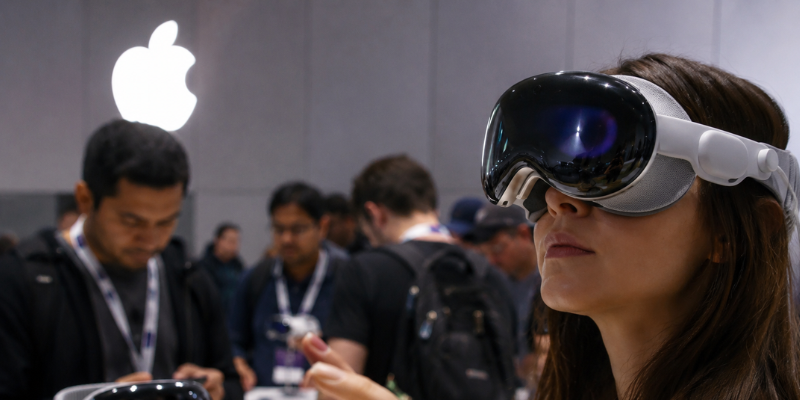
One of the most exciting developments involves augmented reality glasses.
Instead of constantly checking a phone, users may eventually receive information directly within their field of vision. Navigation directions, incoming messages, translations, and calendar reminders could appear naturally while walking or working.
Consider a traveler visiting a foreign country. Instead of holding up a smartphone to translate signs, smart glasses could instantly display translations while looking at them.
Although current devices remain expensive and somewhat bulky, improvements in battery life, display quality, and lightweight materials continue to move the technology closer to mainstream adoption.
Wearable Technology Is Driving the Future Beyond Smartphones
Smartwatches and fitness trackers have evolved far beyond counting daily steps.
Modern wearable technology can monitor:
- Heart rate
- Blood oxygen levels
- Sleep quality
- Stress indicators
- Exercise performance
The next generation of wearables aims to become increasingly independent from smartphones.
For example, future smartwatches may handle messaging, payments, navigation, and AI assistance without requiring a nearby phone. This creates a more seamless digital experience while reducing screen dependency.
Many consumers already appreciate the convenience of leaving their phones behind during workouts or short trips.
Ambient Computing Powers the Future Beyond Smartphones
Perhaps the biggest change will not involve a single new device at all.
Ambient computing refers to technology that works quietly in the background without demanding constant attention.
Imagine arriving home after work:
- Lights automatically adjust.
- Music starts playing.
- The room temperature changes to your preferred setting.
- Your calendar reminds you about tomorrow’s appointment.
- Dinner recommendations appear based on ingredients already in your refrigerator.
Instead of interacting with individual devices, technology simply responds to your environment and habits.
The ultimate goal is to make computing nearly invisible.
Challenges Facing the Future Beyond Smartphones
While the vision sounds exciting, significant challenges remain.
Privacy Concerns
Always-connected devices collect enormous amounts of personal information.
Consumers increasingly expect companies to provide stronger privacy protections, transparent data practices, and greater control over their information.
Without trust, widespread adoption may slow considerably.
Battery Technology
Many future devices require lightweight designs while operating throughout the day.
Battery improvements remain one of the industry’s biggest engineering challenges.
Long-lasting power without increasing device size will play a critical role in user adoption.
Social Acceptance
History has shown that even innovative products can struggle if they feel awkward to wear or use.
Technology companies must design products that fit naturally into everyday life rather than drawing unnecessary attention.
Style may become just as important as technical performance.
How Businesses Can Prepare for the Future Beyond Smartphones
The transition beyond smartphones will not happen overnight.
Instead, consumers will gradually adopt multiple connected devices that work together through artificial intelligence.
Businesses should begin preparing by:
- Investing in AI-powered customer experiences.
- Optimizing services for voice interactions.
- Developing applications that function across multiple device types.
- Strengthening cybersecurity and privacy protections.
- Monitoring emerging wearable technology trends.
Individuals can also prepare by becoming familiar with AI assistants, smart home ecosystems, and wearable devices that are already available today.
These early experiences provide valuable insight into where personal technology is heading.
The Future Beyond Smartphones Is Closer Than You Think
Many experts believe smartphones won’t disappear entirely. Instead, they may become background devices while smarter interfaces take center stage.
Future technology could rely more heavily on:
- Voice interactions
- Gesture controls
- Eye tracking
- Context-aware AI
- Mixed reality displays
- Intelligent wearable devices
Rather than carrying one powerful device, people may use several smaller technologies working together seamlessly.
The ultimate objective isn’t replacing smartphones overnight—it’s creating technology that feels more natural, more helpful, and far less distracting.
Frequently Asked Questions
Will smartphones disappear completely?
Probably not in the near future. Smartphones are expected to remain important for many years, but their role may gradually shift as wearable devices, AI assistants, and augmented reality technologies become more capable.
Why are tech companies investing heavily in AI instead of better smartphones?
Artificial intelligence has the potential to simplify everyday tasks by reducing dependence on individual apps. AI also creates new opportunities for personalized experiences across multiple connected devices.
Are smart glasses ready for everyday use?
Current smart glasses have improved significantly, but challenges such as battery life, affordability, comfort, and social acceptance still limit widespread adoption. Rapid innovation continues to move the technology forward.
What industries will benefit most from post-smartphone technology?
Healthcare, education, retail, manufacturing, transportation, entertainment, and remote work are expected to benefit substantially from AI-powered wearables, augmented reality, and ambient computing solutions.
How can consumers prepare for technology beyond smartphones?
Start exploring wearable devices, smart home products, and AI assistants while paying close attention to privacy settings and cybersecurity. Building familiarity with these technologies today will make future transitions much easier.
Conclusion
Technology has always evolved through major shifts, and the smartphone revolution may soon enter its next chapter. As artificial intelligence, smart wearables, augmented reality, and ambient computing mature, digital experiences are becoming more seamless and intuitive than ever before. While smartphones will remain valuable for years to come, they are unlikely to remain the sole gateway to technology. The future belongs to connected ecosystems where intelligent devices work together effortlessly, making everyday life simpler, smarter, and more human-centered.