
The world of display technology has evolved rapidly over the last decade, and the 8k display is now one of the most talked-about innovations. With an incredible level of detail and clarity, it promises an immersive viewing experience that goes far beyond traditional Full HD or even 4K.
But is an 8K display truly worth the investment, or is it simply a technology ahead of its time? This guide explores everything you need to know, from image quality and gaming performance to practical uses and buying advice.
What Is an 8K Display?
An 8k display features a resolution of 7680 × 4320 pixels, delivering approximately 33 million pixels on a single screen. That’s four times the resolution of 4K and sixteen times that of Full HD.
The higher pixel count creates incredibly sharp images, making even tiny details appear crisp and realistic.
Common devices that offer 8K displays include:
- Premium smart TVs
- Professional editing monitors
- Digital signage
- Medical imaging systems
- Commercial production displays
For everyday users, the difference becomes most noticeable on larger screens where extra resolution has room to shine.
Why Are People Interested in 8K Displays?
Higher resolution isn’t just about having more pixels—it improves the overall viewing experience.
Some major benefits include:
- Exceptional image sharpness
- Improved color accuracy
- Better viewing on large screens
- Enhanced realism for photography and videos
- Reduced visible pixels even at close distances
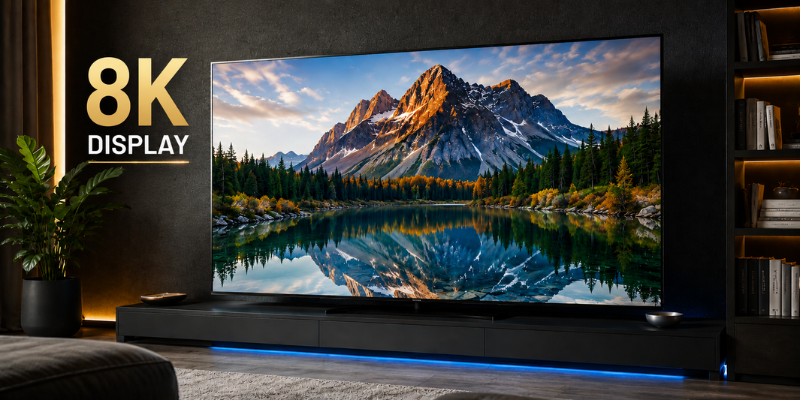
Imagine editing high-resolution landscape photographs. Tiny details such as leaves, distant buildings, and mountain textures become much easier to inspect without excessive zooming.
Similarly, watching nature documentaries on a large 85-inch television feels surprisingly lifelike.
Comparing 8K Display with 4K and Full HD
Many buyers wonder whether upgrading from 4K makes sense.
| Resolution | Pixels | Best Screen Size |
|---|---|---|
| Full HD | 1920 × 1080 | Up to 43 inches |
| 4K UHD | 3840 × 2160 | 50–75 inches |
| 8K UHD | 7680 × 4320 | 75 inches and above |
In real-world viewing, the jump from Full HD to 4K is dramatic.
The jump from 4K to 8K is more subtle and depends on:
- Screen size
- Viewing distance
- Native 8K content availability
- Quality of image processing
For many households, an excellent 4K television still offers outstanding value.
Where an 8K Display Makes the Biggest Difference
Although entertainment often gets the spotlight, professional industries benefit even more.
Video Production
Professional filmmakers can edit ultra-high-resolution footage while seeing every detail clearly.
Graphic Design
Designers working with massive artwork appreciate the additional workspace and sharpness.
Medical Imaging
Doctors reviewing MRI scans or X-rays can inspect fine details with greater precision.
Architecture
Large building plans and 3D models become easier to evaluate on ultra-high-resolution displays.
Scientific Research
Researchers studying microscopic images or satellite photography often require the highest possible resolution.
Is There Enough 8K Content Available?
This remains one of the biggest challenges.
Native 8K content is still relatively limited compared to 4K.
Currently available sources include:
- Selected YouTube videos
- Professional camera footage
- Digital photography
- Some experimental broadcasts
- Gaming on powerful PCs
Fortunately, modern televisions use advanced AI upscaling to improve lower-resolution content.
While upscaled content doesn’t equal true 8K, today’s processors can produce surprisingly impressive results.
Gaming on an 8K Display
Gaming enthusiasts often dream about experiencing games in full 8K.
The reality is slightly different.
Running modern games at native 8K requires extremely powerful hardware.
You’ll typically need:
- High-end graphics cards
- Powerful processors
- Large amounts of RAM
- HDMI 2.1 support
- Fast SSD storage
Most gamers currently play at 4K while allowing the display to upscale the image.
Competitive gamers usually prioritize higher refresh rates over maximum resolution.
Things to Consider Before Buying an 8K Display
Buying the most expensive display isn’t always the smartest decision.
Here are important factors to evaluate.
Screen Size
An 8K display provides the greatest benefit on televisions larger than 75 inches.
Viewing Distance
If you sit far from the screen, you may not notice much improvement over 4K.
Budget
Premium 8K models remain considerably more expensive than high-quality 4K alternatives.
Content Availability
Ask yourself whether you’ll actually watch native 8K videos.
Future-Proofing
If you keep televisions for many years, investing in newer technology could make sense.
Common Myths About 8K Displays
Many misconceptions surround this technology.
Myth: Everyone Can See the Difference
Not always.
Viewing distance and screen size significantly affect visible improvements.
Myth: 8K Is Only Marketing
While marketing plays a role, the technology itself genuinely delivers more detail.
Professionals working with large images often notice meaningful improvements.
Myth: You Need Native 8K Content
Modern AI upscaling allows even 4K videos to look excellent on many premium displays.
Myth: 8K Is Only for Television
Many industries already use 8K displays for productivity, healthcare, engineering, and research.
Practical Tips Before Purchasing
If you’re shopping for an 8k display, keep these recommendations in mind.
- Compare picture quality rather than specifications alone.
- Choose trusted manufacturers with strong image processing.
- Check HDMI version compatibility.
- Consider future gaming or editing needs.
- Read long-term user reviews.
- Balance price with your actual usage.
A family watching streaming movies occasionally may gain little from 8K today.
A professional photographer editing ultra-high-resolution images every day may find it invaluable.
The Future of 8K Display Technology
The technology continues to mature every year.
Several developments are expected in the coming years:
- Lower prices
- Better AI upscaling
- Faster graphics hardware
- More native 8K streaming
- Wider adoption in gaming
- Improved broadcasting infrastructure
As internet speeds increase and hardware becomes more affordable, 8K displays will likely become more common in homes.
Frequently Asked Questions
Is an 8K display better than 4K?
An 8K display offers four times more pixels than 4K, resulting in greater sharpness on large screens. However, the difference depends on viewing distance and available content.
Do I need an 8K display for gaming?
Most gamers don’t need 8K today. High refresh rates and stable frame rates usually provide a better gaming experience than extremely high resolution.
Is there enough 8K content available?
Native 8K content remains limited, although platforms like YouTube and professional production equipment continue expanding available content each year.
Can an 8K display improve 4K videos?
Yes. Modern televisions use AI-powered upscaling to enhance lower-resolution content, making 4K videos appear sharper on an 8K display.
Is buying an 8K display future-proof?
If you plan to keep your television or monitor for many years, an 8K display can be a good long-term investment as more content and hardware become available.
Conclusion
An 8k display represents the cutting edge of modern visual technology, delivering extraordinary detail and realism. While it isn’t essential for everyone today, it offers clear advantages for professionals, enthusiasts, and buyers looking to invest in the future. As content availability grows and prices continue to fall, 8K is likely to become a more practical choice for everyday consumers. The best decision ultimately depends on your viewing habits, budget, and long-term needs.